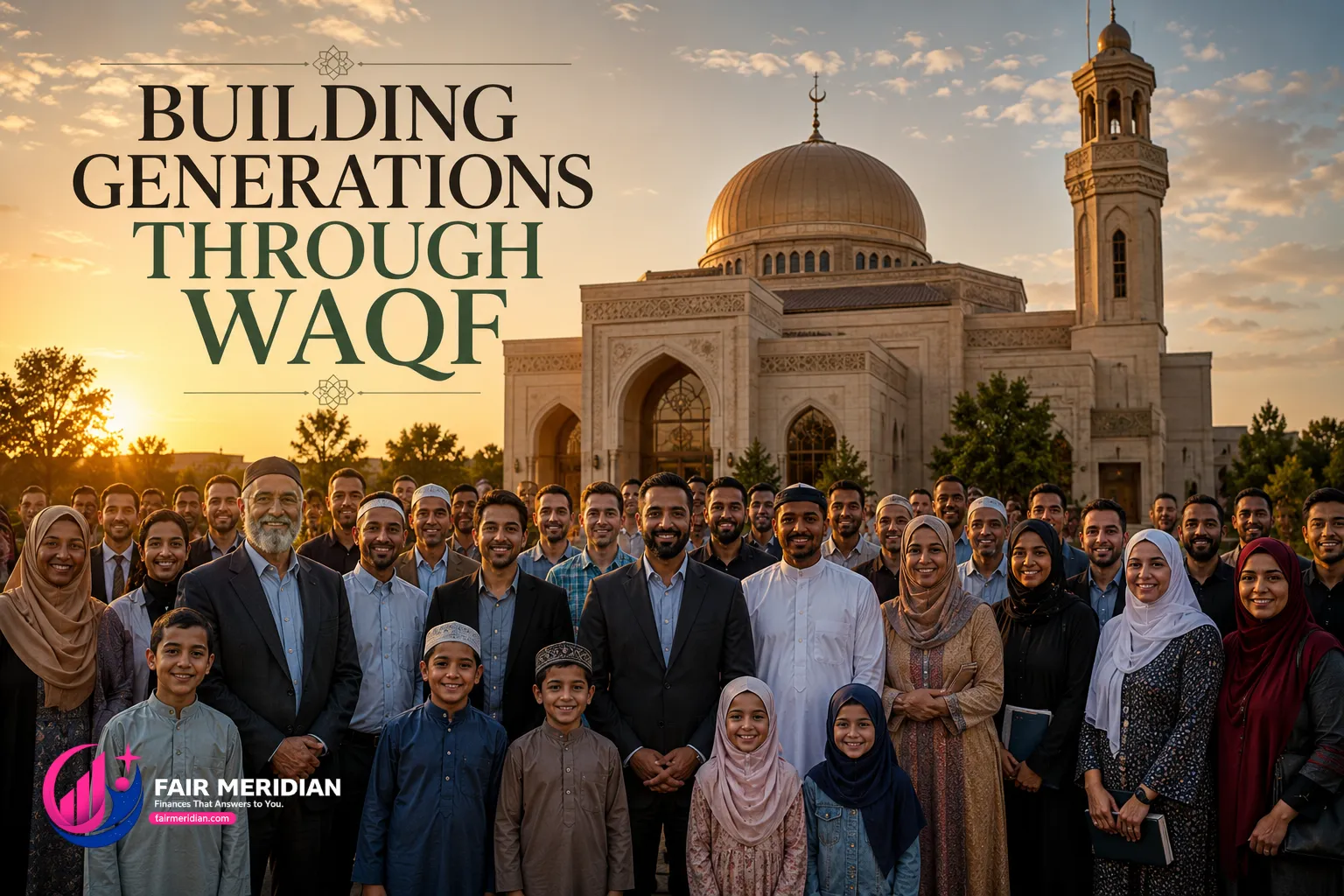
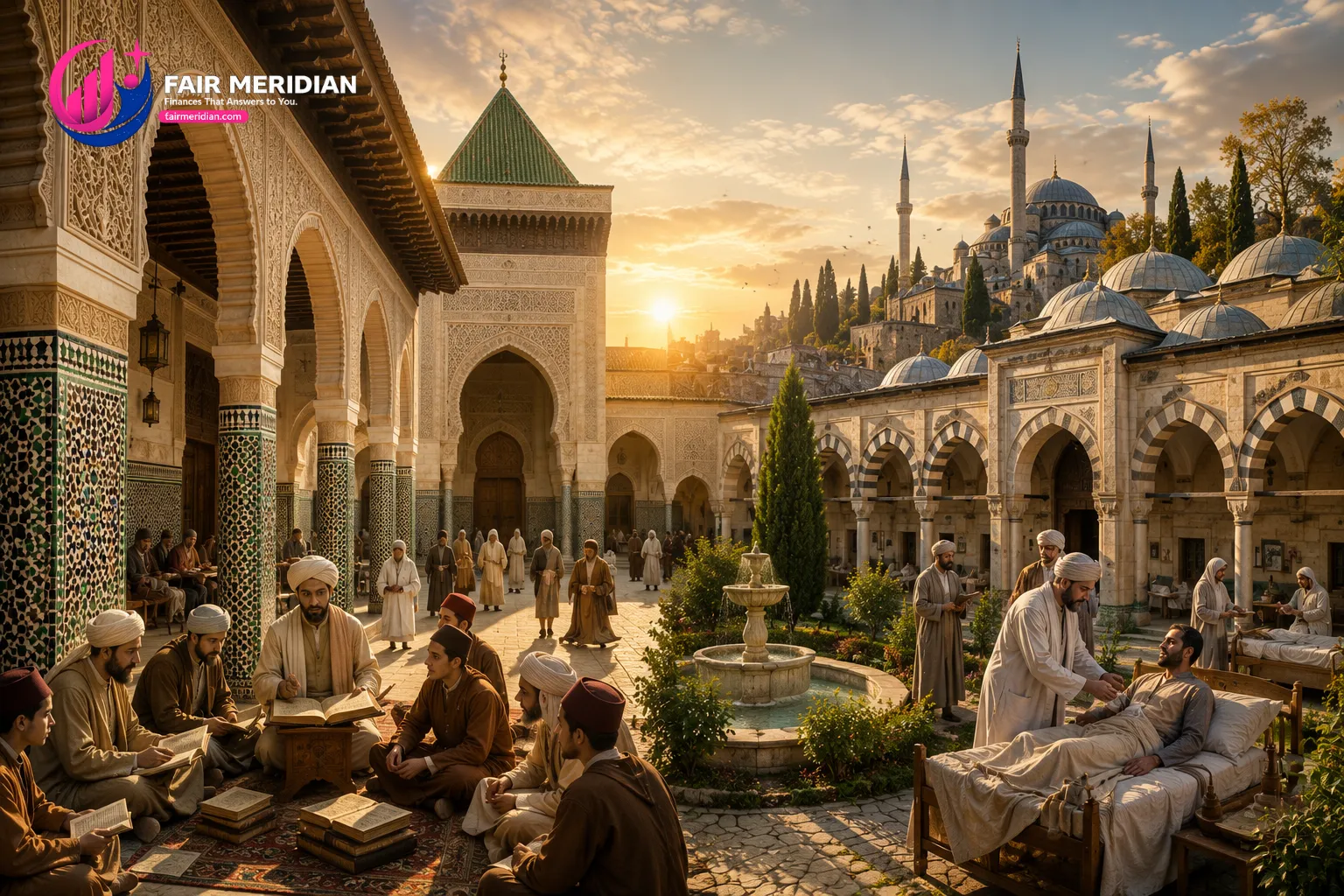
Waqf built the University of al-Qarawiyyin in 859 CE. It funded hospitals in Ottoman Istanbul that treated patients of every faith. It maintained bridges, water fountains, and caravanserais across the Islamic world for a millennium. The endowment model that sustained Islamic civilization for 1,400 years is being revived by American Muslim communities right now — in Dearborn, Houston, Los Angeles, and dozens of cities in between.
This post is for mosque board members, community leaders, and engaged Muslims who want to understand how waqf actually works under US law, what real American Muslim communities have done with it, and what your community needs to start one. Not theory — a practical guide you can bring to your next board meeting.
What Waqf Is and Why It Matters for US Muslims
A waqf (plural: awqaf) is an Islamic endowment — property permanently dedicated to a charitable or religious purpose whose proceeds benefit the community indefinitely. The defining characteristics:
Permanence: Once dedicated as waqf, the principal cannot be sold, transferred, or diminished. It is locked in charitable purpose forever.
Income generation: The waqf asset generates ongoing income — rent from property, investment returns from a fund — which is used for the designated charitable purpose.
Perpetuity: Unlike a one-time donation, a waqf continues benefiting the community across generations. The original donor's charitable act provides sadaqah jariyah (ongoing charity) indefinitely.
For American Muslim communities, waqf addresses three specific problems that donations and regular fundraising cannot:
Mosque permanence: A mosque that owns its building can always be sold in a legal dispute, a financial crisis, or a demographic shift. A mosque whose building is held as waqf cannot — it is permanently dedicated to Muslim worship and community use.
Generational funding: Islamic schools, cemeteries, and social services need funding that is independent of the current generation's generosity. A waqf endowment generates income automatically, every year, without fundraising drives.
Community wealth building: Muslim communities that channel part of their wealth into permanent endowments build institutional capital that compounds across generations — not just for the current generation's needs but for future Muslim Americans we will never meet.
Real American Muslim Communities Doing Waqf Right Now
North American Islamic Trust (NAIT) — Protecting 500+ Properties
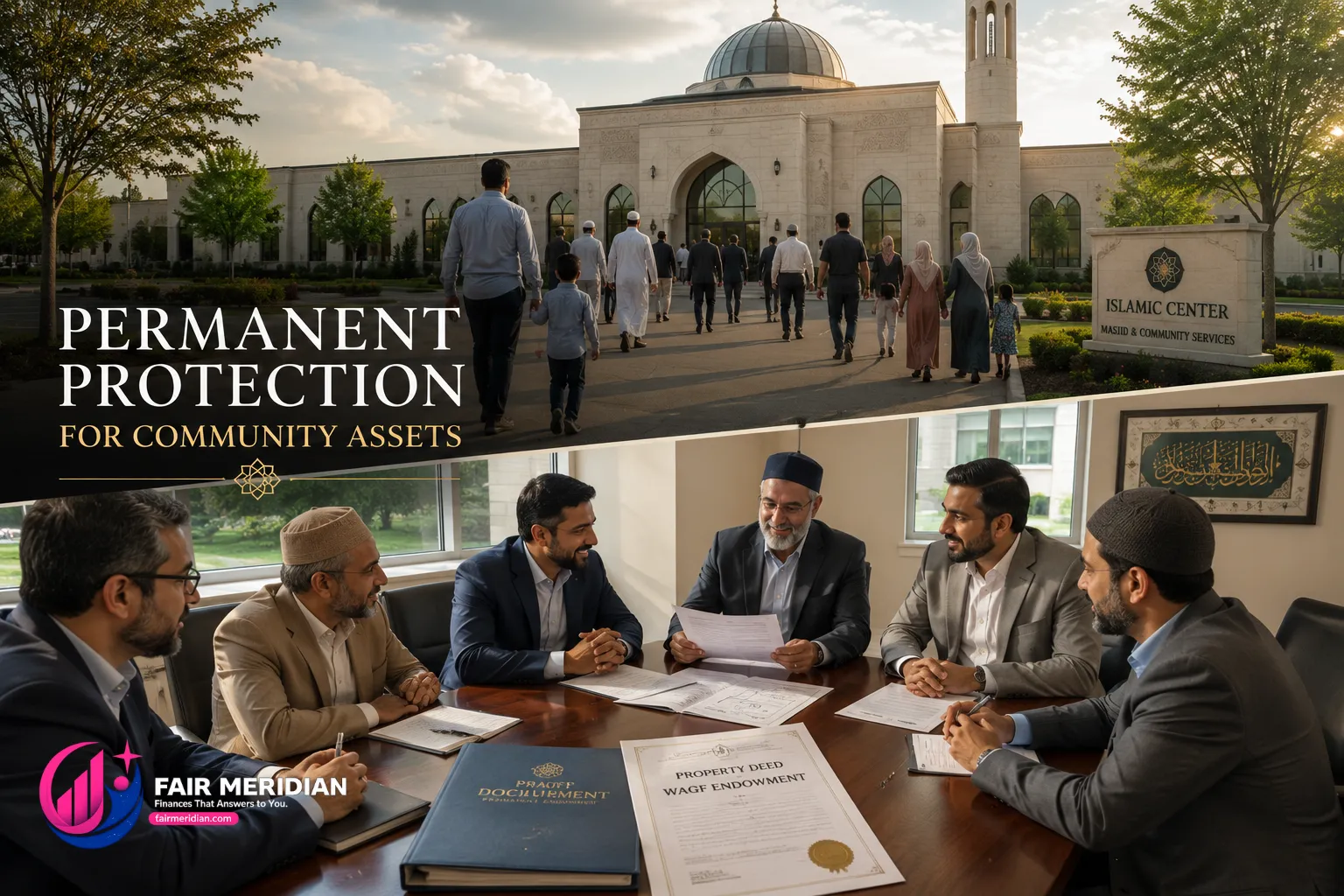
The North American Islamic Trust, founded in 1971 and headquartered in Plainfield, Indiana, holds legal title to approximately 500+ mosque and Islamic center properties across North America on behalf of Muslim communities.
NAIT's model is not technically a waqf under classical Islamic jurisprudence — but it serves the primary protective function of a waqf: ensuring that mosque properties cannot be sold, transferred, or claimed by factions in a community dispute. When a mosque transfers title to NAIT, the property is permanently protected for Muslim community use as long as NAIT exists.
Why this matters: dozens of US mosques have faced property disputes where factions attempted to sell or transfer the building. Communities that had transferred title to NAIT were protected. Communities that hadn't faced years of litigation. NAIT protection is the most accessible first step toward waqf-equivalent property protection available to US Muslim communities today.
Zakat Foundation of America — Waqf for Development
The Zakat Foundation of America operates a dedicated waqf program that allows donors to contribute to a permanently endowed fund whose returns fund ongoing charitable programs. Contributions to the Zakat Foundation Waqf are permanently held — only the investment returns are used for charitable distribution.
This is an investment waqf model: contributions go into a managed investment fund (in halal assets), investment returns fund charitable programs, and the principal is never spent. A $10,000 contribution that returns 5% annually generates $500/year in perpetuity — funding one family's food assistance for a month, year after year, from a single donation.
Mosque Property Waqf — The Most Common US Model
Across US Muslim communities, the most common form of waqf is a formal declaration that the mosque's real property is dedicated as waqf — permanently and irrevocably for Muslim community use. This declaration, documented in the mosque's governing documents and sometimes through a formal legal instrument, means:
No board majority can vote to sell the mosque building
The property is not available to creditors in a financial crisis
Future generations inherit a protected community asset
The founding community's investment in the property is preserved perpetually
Examples of US communities with documented mosque waqf declarations include major Islamic centers in Dearborn, Michigan; Houston, Texas; and the Washington DC metro area — where formally documented waqf clauses in the mosque's governing charter protect the property against future sale or disposition regardless of community leadership changes.
Zaytuna College — Educational Waqf in Progress
Zaytuna College in Berkeley, California — the first accredited Muslim liberal arts college in the United States — is building an endowment that incorporates waqf principles. The college's long-term financial strategy includes developing a permanent endowment whose investment returns will fund faculty salaries, student scholarships, and campus operations in perpetuity.
An educational institution that reaches financial independence through waqf endowment income no longer depends on annual fundraising cycles to survive — its operations are funded by the permanent wealth of the Muslim community that established it.
US Legal Structures for Waqf — The Four Options
Waqf is an Islamic legal concept, not a US legal category. To create a waqf under US law, you use existing US legal vehicles that achieve the Islamic objectives of permanence, charitable purpose, and income distribution. Here are the four options and their tradeoffs.
Option 1: 501(c)(3) Nonprofit with Restricted Endowment Fund
Best for: Most small and medium US Muslim communities. Simplest to establish.
Most US mosques already have 501(c)(3) nonprofit status. A waqf can be created within an existing 501(c)(3) by:
Establishing a "Waqf Fund" as a designated restricted fund within the nonprofit's accounts
Writing a gift acceptance policy that accepts "permanently restricted" gifts to the Waqf Fund
Documenting in the gift agreement that the principal is permanently restricted (cannot be spent) and only investment returns can be used
Investing the Waqf Fund in halal assets (SPUS at an institutional Fidelity account)
Using only annual investment returns for designated charitable purposes
Tax benefits: Donations to the Waqf Fund are tax-deductible. Investment returns are tax-exempt within the 501(c)(3). The waqf operates as a permanently restricted endowment within your existing legal structure.
Risk: The 501(c)(3)'s board could theoretically change the restrictions in the future. Stronger protection requires a charitable trust.
Option 2: Charitable Trust (Strongest Legal Protection)
Best for: Property waqf; larger endowments; communities prioritizing maximum legal permanence.
A charitable trust is a legal entity created by a trust document (deed of trust) that permanently holds assets for charitable purposes. The trust document specifies the waqf purpose, the trustee structure, and the terms under which income can be distributed. Key advantages over a 501(c)(3):
Stronger permanence: A charitable trust is governed by its founding document — it cannot be amended to permit sale of principal without court approval and demonstration of changed circumstances (cy pres doctrine).
Property protection: Real property held in a charitable trust is more difficult to sell or transfer than property held by a 501(c)(3) — court involvement is required.
Trustee structure: Trustees have fiduciary duties to the trust's charitable purpose — personal liability for misuse of trust assets.
How to establish: A charitable trust requires an attorney familiar with trust law in your state. Typical cost: $2,000–$5,000 in legal fees to draft and establish. Apply separately for 501(c)(3) status if the trust will receive tax-deductible donations.
Option 3: LLC Held by Charitable Trust
Best for: Income-generating real estate waqf; communities with commercial properties.
For real estate that generates rental income, an LLC structure provides operational flexibility while a parent charitable trust provides permanence and protection. The structure: Charitable Trust → owns → LLC → owns → Real Property. The LLC manages the property, collects rent, and distributes income to the trust. The trust distributes income to the charitable purpose. The real property is two legal steps removed from any individual board or community faction.
Option 4: Supporting Organization (for Larger Communities)
Best for: Large Islamic centers wanting to establish a dedicated waqf organization linked to but legally separate from the mosque.
A Type I or Type III supporting organization (per IRS regulations) can serve as a dedicated waqf entity that is legally connected to but separate from the parent mosque organization. This provides cleaner separation between the mosque's operating funds and the permanently restricted waqf endowment, with dedicated governance focused exclusively on waqf stewardship.
The Minimum Viable Waqf — What a Small Mosque Can Do Today
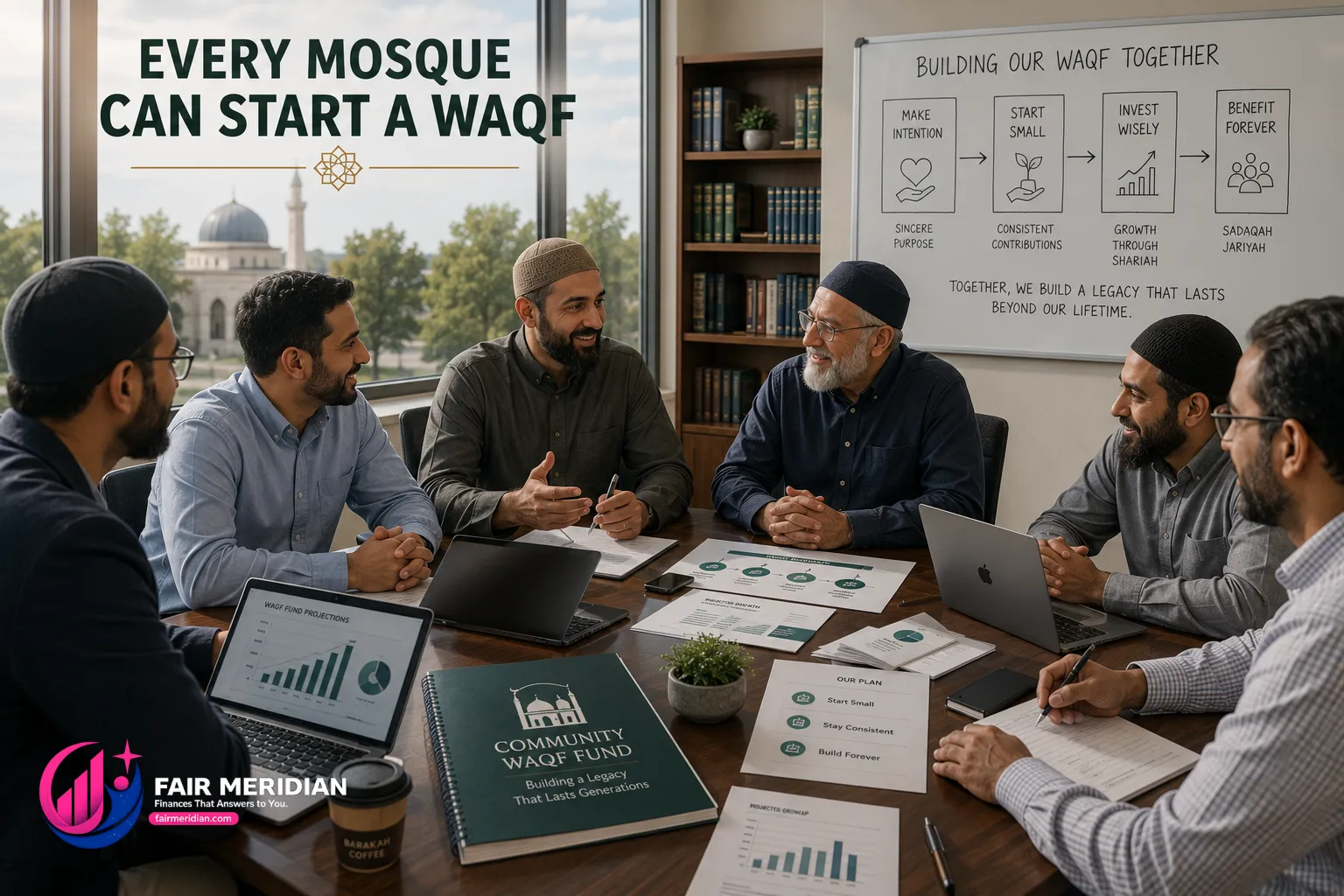
The biggest barrier to waqf in US Muslim communities is the assumption that waqf requires millions of dollars and complex legal structures. It doesn't. Here is the minimum viable waqf — what a small mosque with a motivated board can establish in 60–90 days.
Step 1: Board Resolution (Week 1)
Pass a formal board resolution establishing the "Waqf Endowment Fund" as a permanently restricted fund within your existing 501(c)(3). The resolution should specify: (1) the fund's purpose (e.g., funding Islamic education, mosque operations, or community services), (2) that principal is permanently restricted and only investment income may be used, (3) investment policy (halal assets only, consistent with AAOIFI standards).
Step 2: Open a Dedicated Investment Account (Week 2)
Open an institutional account at Fidelity or Schwab in your 501(c)(3)'s name, specifically designated as the Waqf Endowment Fund. This keeps waqf assets legally separated from the mosque's operating accounts. Invest 80% in SPUS and 20% in AMAL — a halal growth-and-income allocation.
Step 3: Initial Funding Campaign (Weeks 3–6)
Launch a waqf campaign in the mosque community. The target: $25,000–$100,000 initial corpus. At $25,000 invested in SPUS/AMAL returning 7% average annually: $1,750/year in perpetual income. At $100,000: $7,000/year permanently — enough to fund a Quran teacher, a youth program, or recurring maintenance costs.
Key message for the community: a $1,000 waqf donation today will generate approximately $70/year forever. Over 30 years at 7% growth, your $1,000 corpus grows to $7,600 — generating $532/year in perpetual income for Islamic purposes long after you are gone. This is sadaqah jariyah — ongoing charity — at its most mathematically precise.
Step 4: Gift Agreement Documentation (Ongoing)
For every waqf contribution, provide donors with a simple gift agreement stating: (1) the donor intends this gift as a waqf — permanently restricted for [designated purpose], (2) the principal will never be spent, (3) only investment returns will be used, (4) the gift is irrevocable. This documentation protects the donor's intent across leadership changes.
Step 5: Annual Reporting to the Community
Each year, present the waqf endowment balance, investment returns, and how returns were used to the mosque community. Transparency builds trust and attracts new contributions. Communities that show specific impact ("our $45,000 waqf funded the Quran teacher's salary for the third year") grow their endowments faster than those that simply report balances.
The Property Waqf — Protecting Your Mosque Building
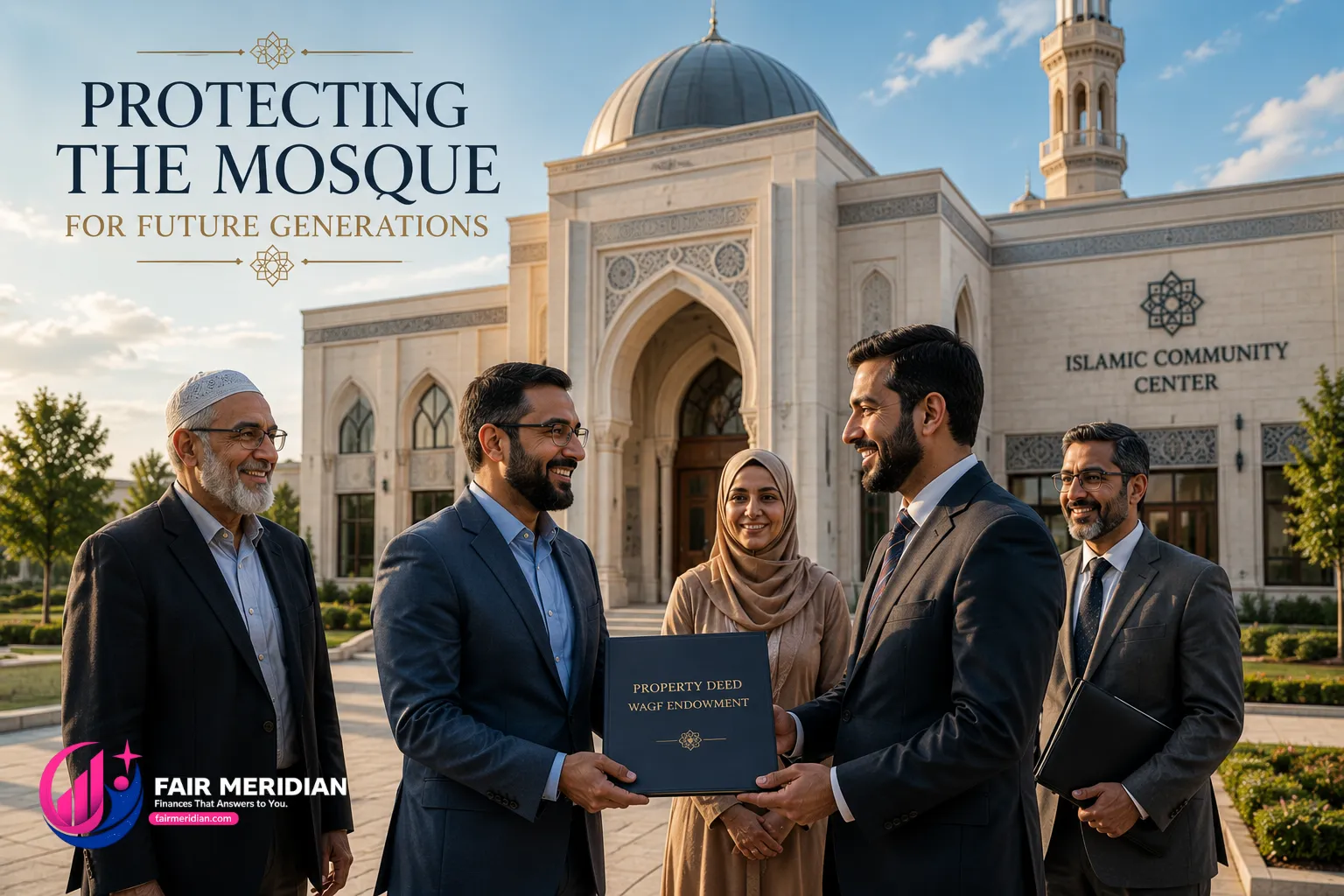
If your mosque owns its building and you want to ensure it can never be sold, the property waqf is the most important waqf your community can establish.
The Two-Step Property Waqf Process
Step 1 (Immediate): Transfer the mosque's title to NAIT (North American Islamic Trust). This is the fastest, cheapest, and most established property protection mechanism for US Muslim communities. NAIT holds title to 500+ properties and has a 50-year track record. Contact NAIT at isna.net/nait for the title transfer process.
Step 2 (Comprehensive): Establish a charitable trust with a formal waqf deed that permanently dedicates the property for Muslim community worship and educational use. Work with an Islamic estate planning attorney to draft a waqf declaration that is: (a) consistent with classical Islamic waqf requirements, (b) legally enforceable under your state's charitable trust law, and (c) recognized by future trustees and courts as expressing irrevocable charitable intent.
What to Do With Waqf Income — A Framework
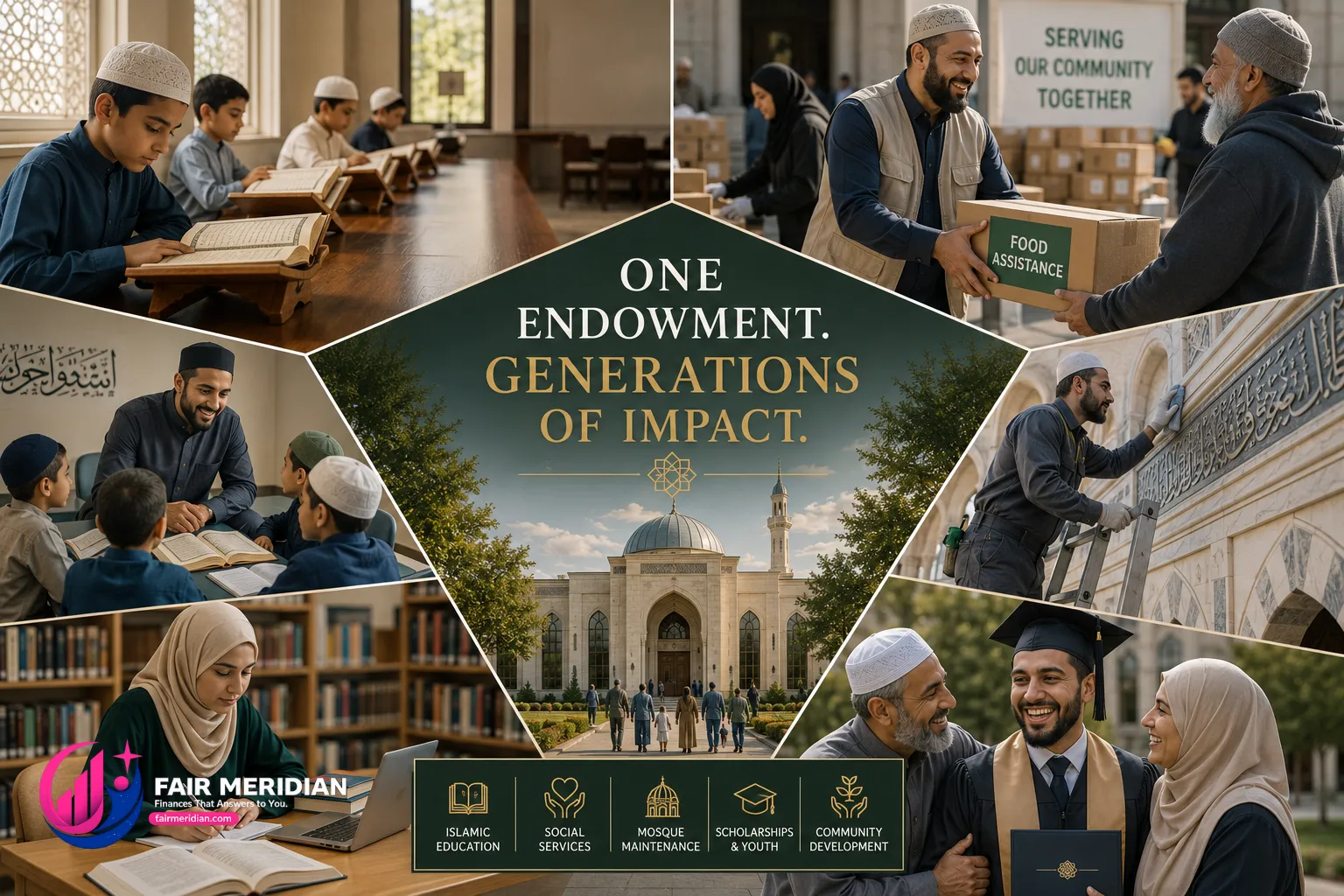
Waqf income (investment returns from the endowment fund) must be used for the designated charitable purpose. The most effective uses in US Muslim communities:
Waqf Income Use | Annual Impact at $50K Waqf | Annual Impact at $200K Waqf |
|---|---|---|
Quran teacher salary supplement | ~$3,500/year (~30% of part-time salary) | ~$14,000/year (~full part-time salary) |
Islamic school scholarship fund | ~$3,500/year (2–3 scholarships) | ~$14,000/year (8–10 scholarships) |
Mosque maintenance reserve | ~$3,500/year (prevents emergency fundraising) | ~$14,000/year (major maintenance coverage) |
Community food pantry | ~$3,500/year (~100 families monthly) | ~$14,000/year (~400 families monthly) |
Convert support services | ~$3,500/year (education materials, mentoring) | ~$14,000/year (comprehensive program) |
Annual income calculated at 7% average annual return on waqf corpus invested in SPUS/AMAL halal ETF allocation. Actual returns vary.
Frequently Asked Questions
How much money do you need to start a waqf?
There is no Islamic minimum — a waqf can begin with any amount that generates meaningful ongoing income. Practically speaking, $10,000 generates approximately $700/year at 7% average return — enough to fund a small but real charitable program. A more impactful starting corpus is $25,000–$50,000. A community that directs Ramadan fundraising toward waqf even at $10,000/year will build a meaningful endowment within a decade.
Is a waqf donation tax-deductible?
Yes — if made to a 501(c)(3) organization (which virtually all US mosques are). A permanently restricted gift to a 501(c)(3) Waqf Endowment Fund is fully tax-deductible in the year of the contribution. The donor deducts the full contribution at their ordinary income tax rate, not just capital gains rate — making waqf gifts of appreciated assets (stocks that have grown in value) particularly efficient: the donor deducts the full fair market value and pays no capital gains tax on the appreciation.
Can waqf assets be invested in the stock market?
Yes — and this is the recommended approach for investment waqf. The waqf corpus should be invested in halal assets to generate permissible returns. A typical US community waqf investment allocation: 80% SPUS (S&P 500 Sharia ETF), 20% AMAL (sukuk). At 7% long-run average return, this grows the corpus while generating ~4–5% annual income for charitable distribution. Open an institutional account at Fidelity in the 501(c)(3)'s name.
Can a waqf be for my family rather than the public?
Yes — Islamic jurisprudence permits both public waqf (for the general Muslim community or broader public) and private/family waqf (for the donor's descendants, with reversion to public charitable purpose if the family line ends). Under US law, a family waqf is typically structured as a charitable remainder trust or a private family foundation with Islamic inheritance principles incorporated into the governing documents. Family waqf under US law requires more sophisticated legal structuring — work with an attorney who understands both US estate law and Islamic inheritance principles.
What happens to the waqf if the mosque closes?
A properly structured waqf charitable trust includes a successor purpose clause — if the original mosque closes or ceases to exist, the waqf assets transfer to the nearest Islamic charitable purpose (another mosque, an Islamic educational institution, or the general Muslim community). This should be drafted into the founding trust document. Without this clause, a court would apply the cy pres doctrine — redirecting the assets to "as close as possible" to the original purpose.
The Islamic endowment tradition built civilizations. American Muslim communities are reviving it — starting with $10,000 investment funds, property waqf declarations, and the first US Islamic college endowments. The question for your community is not whether to build a waqf but when to start.
For the complete waqf property guide — US legal structures in detail, the specific attorney questions to ask, and tax-efficient waqf funding strategies — read our Waqf Guide and the dedicated Waqf Property USA Guide. For the halal investment strategy to grow your waqf corpus, read our Halal Investing USA Guide.