
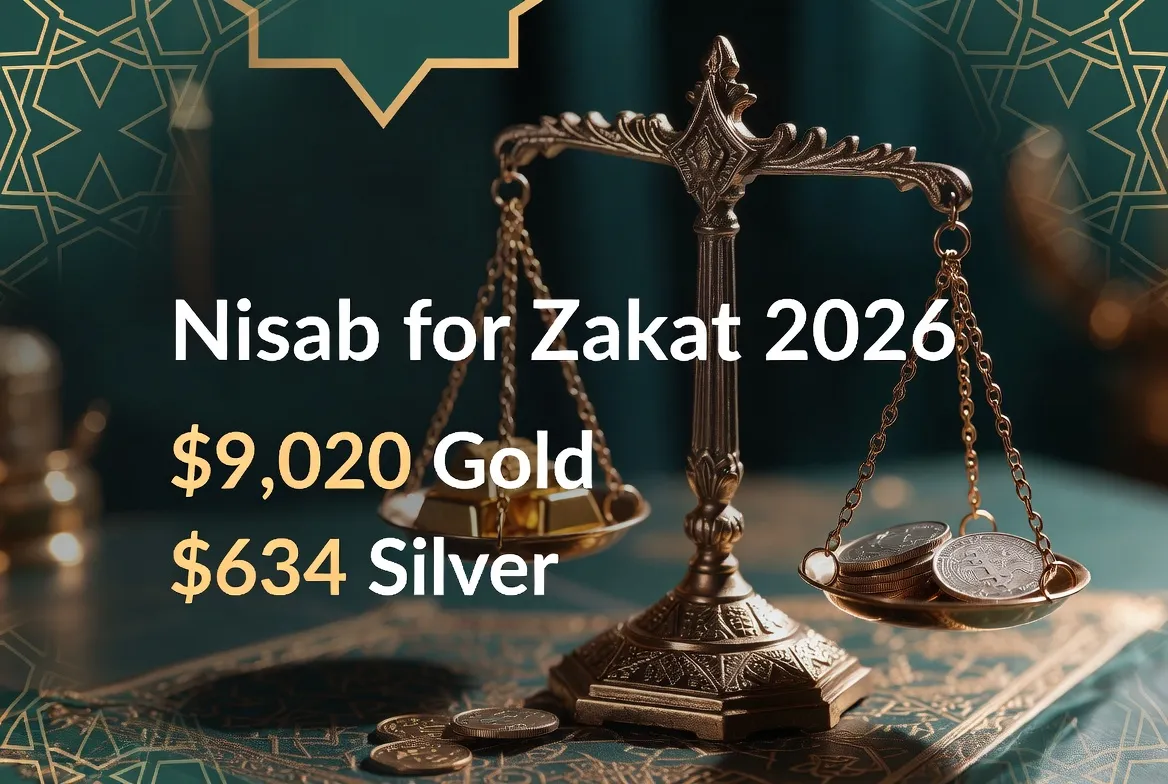
The 2026 nisab for zakat: approximately $9,020 using the gold standard (87.48 grams of gold), or approximately $634 using the silver standard (612.36 grams of silver) — based on metal prices as of May 2026.
If your net zakatable wealth equals or exceeds this threshold, zakat is obligatory on you at 2.5%. Here is exactly how these numbers are calculated, why they differ, and which one applies to you.
The Current 2026 Nisab — Both Standards
Standard | Weight | Current Price (May 2026) | Nisab in USD |
|---|---|---|---|
Gold Nisab | 87.48 grams (7.5 tola) | ~$3,200/troy oz | ~$9,020 |
Silver Nisab | 612.36 grams (52.5 tola) | ~$32/troy oz | ~$634 |
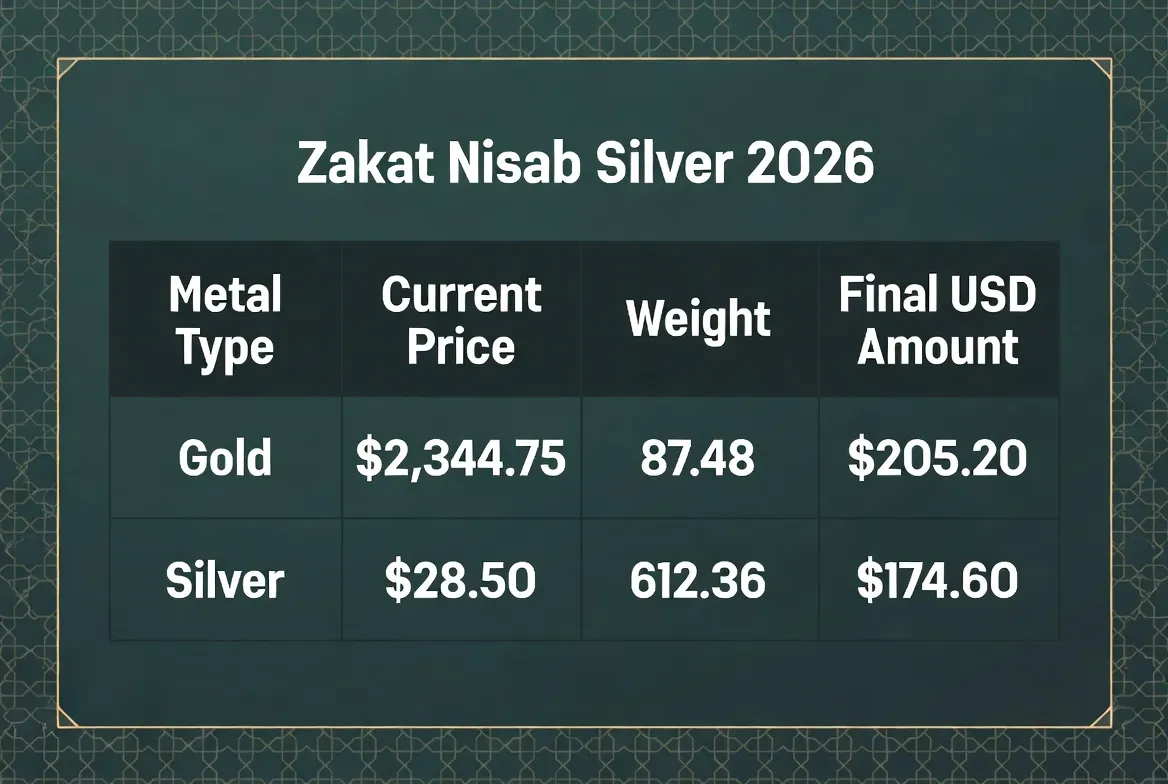
These figures update as gold and silver prices change. Verify current prices at goldprice.org before finalizing your calculation, or check the live nisab widget in our complete Zakat Guide, which updates monthly.
Why the Nisab Is Not a Fixed Dollar Amount
The nisab was established 1,400 years ago in weight of gold and silver — not in any currency, because no modern currency existed at the time. This means the nisab threshold is permanently anchored to a fixed quantity of precious metal, and its dollar value fluctuates as gold and silver prices move.
When gold prices rise, the dollar value of the gold nisab rises with it. When gold prices fall, the threshold falls. This is intentional — it ties the obligation to a stable store of value rather than to a currency that can be inflated or devalued by any government.
Why the Gold and Silver Nisab Are So Different
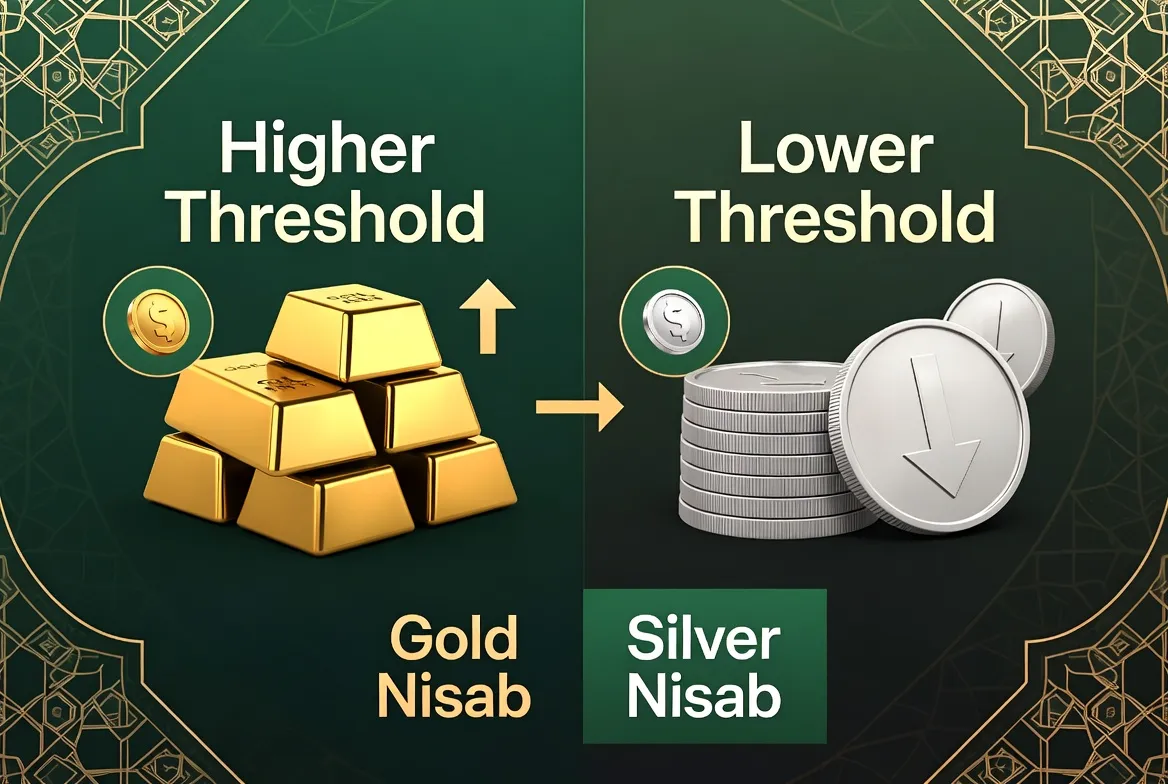
At current 2026 prices, the gold nisab ($9,020) is more than 14 times higher than the silver nisab ($634). This gap exists because gold and silver prices have diverged dramatically since the 7th century — gold has appreciated far more relative to silver than it had historically, when the gold-to-silver price ratio was closer to 1:10 or 1:15. Today it sits around 1:100.
This divergence is exactly why scholars debate which standard to use for modern financial assets:
Using the silver nisab ($634) makes zakat obligatory on almost anyone with a modest savings account — capturing students, part-time workers, and people in temporary financial hardship who historically would not have been considered wealthy enough to owe zakat.
Using the gold nisab ($9,020) more closely preserves the original intent — capturing genuinely surplus wealth above what's needed for basic financial security, without obligating people who are simply maintaining modest savings.
Which Nisab Should You Use?
Most North American zakat organizations recommend the gold standard for modern financial assets. This includes:
Zakat Foundation of America (zakat.org)
National Zakat Foundation USA (nzfusa.org)
Islamic Society of North America (ISNA)
If you follow a specific madhab or scholar with a different recommendation, follow that guidance instead. Both positions have valid scholarly grounding — the 2.5% rate is identical either way; only the threshold for who is obligated differs.
What Happens If You're Right at the Threshold?
If your net zakatable wealth is very close to the nisab — say, $8,800 when the gold nisab is $9,020 — you owe no zakat this year under the gold standard. Check your numbers again closer to your actual zakat anniversary (hawl) date, since both your wealth and the gold price can shift between now and then.
If you are above the silver nisab ($634) but below the gold nisab ($9,020), your obligation depends entirely on which standard you or your scholar follows. This is a meaningful range — worth clarifying your position before your zakat due date arrives.
Calculate Your Exact Zakat Obligation
Knowing the nisab is step one. The next step is calculating your total net zakatable wealth — cash, gold, stocks, 401k (net of penalties), business assets, minus immediate liabilities — and comparing it against this threshold.
Use our free Zakat Calculator to enter your specific assets and get your exact 2026 zakat obligation, automatically compared against the current nisab threshold.
For the complete walkthrough — including how to handle stocks, 401k accounts, gold jewelry, and business assets — read our full Zakat Guide, which includes a live-updating nisab widget and a quick estimator tool.
This is a sensitive topic for some — if calculating or fulfilling a religious financial obligation is causing you distress, consider speaking with a knowledgeable local scholar or imam who can walk through your specific situation with you.