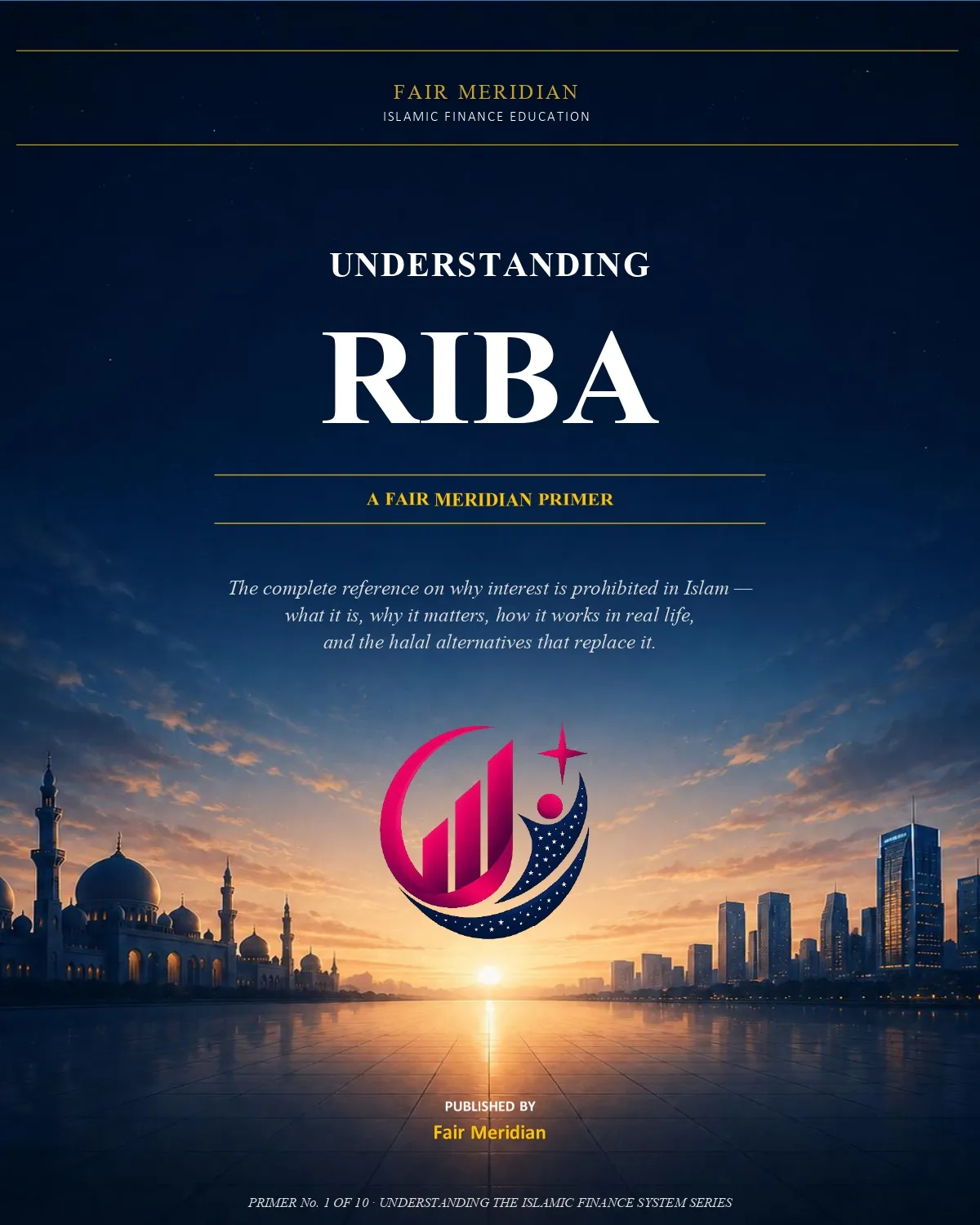
Riba & Prohibition of Interest — Scholarly Resources for US Muslims
Books on Riba (Interest) in Islam
The prohibition of Riba (interest or usury) is one of the foundational principles of Islamic economics and finance. Throughout the Qur'an and the Sunnah, Muslims are instructed to avoid transactions involving Riba because they are considered unjust, exploitative, and harmful to individuals and society. Understanding this prohibition is essential for anyone studying Islamic finance, halal investing, Islamic banking, or ethical financial practices.
The Fair Meridian Riba Library brings together carefully selected books from respected scholars, jurists, economists, and researchers that explain the concept of Riba from both classical Islamic scholarship and contemporary financial perspectives. Whether you are a student, researcher, financial professional, or simply seeking to understand Islamic teachings on interest, this collection provides trustworthy resources for every stage of learning.
What Is Riba?
Riba is an Arabic term that literally means "increase," "addition," or "excess." In Islamic jurisprudence, it refers to specific unlawful increases in financial transactions that violate the principles of justice and fairness established by Islamic law. The most widely recognized form today is interest charged or paid on loans, although classical scholars also identified other forms of Riba that can arise in certain exchanges of commodities.
The Qur'an strongly condemns Riba and distinguishes lawful trade from unlawful gain, emphasizing that commercial activity based on mutual consent is permissible while exploitative financial arrangements are prohibited. This distinction forms one of the key foundations of the Islamic economic system.
Why Does Islam Prohibit Interest?
Islam does not prohibit wealth creation, business, investment, or profit. Instead, it encourages productive economic activity while discouraging unjust enrichment through guaranteed returns that are detached from genuine commercial risk. Islamic finance promotes trade, entrepreneurship, partnership, and asset-backed transactions in place of interest-based lending.
Scholars explain that the prohibition of Riba seeks to protect fairness in financial relationships, reduce economic exploitation, encourage responsible risk sharing, and promote the circulation of wealth throughout society. These objectives align closely with the broader goals (Maqasid al-Shariah) of preserving justice, protecting wealth, and supporting human welfare.
Topics Covered in This Collection
Books in this category explore both the legal and economic dimensions of Riba, including:
The meaning and definition of Riba in Islamic law
Qur'anic verses concerning Riba
Authentic Hadith on interest and financial ethics
Classical juristic discussions from the major schools of Islamic law
The different categories of Riba explained
The distinction between trade and interest-based lending
The social and economic effects of debt-based financial systems
Islamic banking and Shariah-compliant financing alternatives
Murabaha, Musharakah, Mudarabah, Ijarah, and other Islamic contracts
Modern discussions surrounding banking, mortgages, savings, and investments
Contemporary research on Islamic finance and ethical economics
Classical Scholarship and Contemporary Research
The study of Riba has a rich scholarly tradition spanning more than fourteen centuries. Classical jurists examined the legal foundations of interest and commercial transactions in great detail, while modern scholars continue to explore how these principles apply to today's financial systems, including banking, capital markets, consumer finance, digital payments, and global investment.
This collection includes works that help readers understand both the historical development of Islamic commercial law and its practical application within the modern economy.
Who Should Read These Books?
This library is intended for students of Islamic studies, finance professionals, researchers, educators, entrepreneurs, investors, and Muslims seeking to make informed financial decisions. It is equally valuable for readers who are completely new to Islamic finance and for those pursuing advanced academic or professional knowledge.
Related Areas of Islamic Finance
Understanding Riba provides a strong foundation for exploring many other areas of Islamic finance. Readers studying this topic often continue into Islamic banking, halal home financing, Sukuk, Islamic investment, Zakat, Takaful, Islamic commercial contracts, and the wider field of Islamic economics. Together, these subjects explain how Islamic financial principles operate as an integrated ethical system rather than a collection of isolated rules.
Why Understanding Riba Matters Today
Modern financial systems rely extensively on interest-based lending, making it increasingly important for students and professionals to understand the Islamic perspective. Learning about Riba helps readers evaluate financial products more critically, appreciate the ethical objectives behind Islamic finance, and better understand the alternatives developed within Shariah-compliant financial institutions around the world.
Rather than focusing only on prohibition, these books explain the broader philosophy of justice, transparency, responsible wealth creation, and shared economic benefit that underpins Islamic financial thought.
Explore the Riba Collection
Browse the books in this category to explore one of the most important subjects in Islamic economics and finance. From foundational introductions to advanced scholarly research, this carefully curated collection provides reliable resources for understanding the prohibition of Riba and its significance within the broader Islamic financial system.